Advances in lubricant formulation need test evidence relevant to the intended application. On 8 October 2024, the Lanzhou Institute of Chemical Physics (LICP), Chinese Academy of Sciences, published a CGTN French feature on the development of lubrication materials and technology in China, showing laboratory research and technology-transfer work.
Gear-testing equipment appears at approximately 2:50–2:54. Shunmao’s FZG user records list LICP and Qingdao Zhongke Runmei as users of the SHM-3(A) family. This brief laboratory scene illustrates an important stage of development: evaluating lubricants under controlled gear-contact conditions.
The equipment scene appears around 2:50–2:54. Playback starts at 2:50; the source article is also available on LICP’s website.
CGTN Français · 2024-10-08 · Official LICP source
When is FZG testing useful?
During gear-oil formulation comparison, performance validation or laboratory testing, developers need to assess lubricant behavior in meshing gear contact. An FZG rig runs a pair of test gears under specified load, speed, temperature and lubrication conditions. The selected method then defines how scuffing, wear or other damage is assessed.
Typical needs include comparing the scuffing performance of base-oil or additive formulations, validating a formulation against an agreed method, investigating micropitting, pitting or wear, and establishing gear-oil evaluation capability in research or independent testing laboratories. Each purpose requires the appropriate test gears, loading procedure and lubrication accessories.
Complementary methods, different questions
Four-ball, block-on-ring and FZG tests use different contact geometries, so their results are not interchangeable. Four-ball or ring–block testing can support evaluation under those specific contact conditions. FZG testing addresses questions about gear contact and tooth-surface damage. Results should still be interpreted against the target application, the chosen method and further validation.
Instrument use in research and specialist testing
Shunmao’s FZG customer records include LICP, Qingdao Zhongke Runmei, the Zhengzhou Research Institute of Mechanical Engineering (National Gear Product Quality Inspection and Testing Center), SGS Shanghai laboratory and petrochemical research organizations. These records document the use of Chinese-made testing equipment in research, lubricant development and specialist laboratory testing.
Select the configuration around the test objective
For an FZG purchase, first define the method, test gears, load stages, speed, temperature and lubrication arrangement, then confirm control, measurement and safety requirements. Shunmao’s SHM-3A manual describes applications including scuffing, micropitting, pitting and shear-stability testing of polymer-containing oils. These require method-specific configurations and accessories; they are not all included in every base instrument.
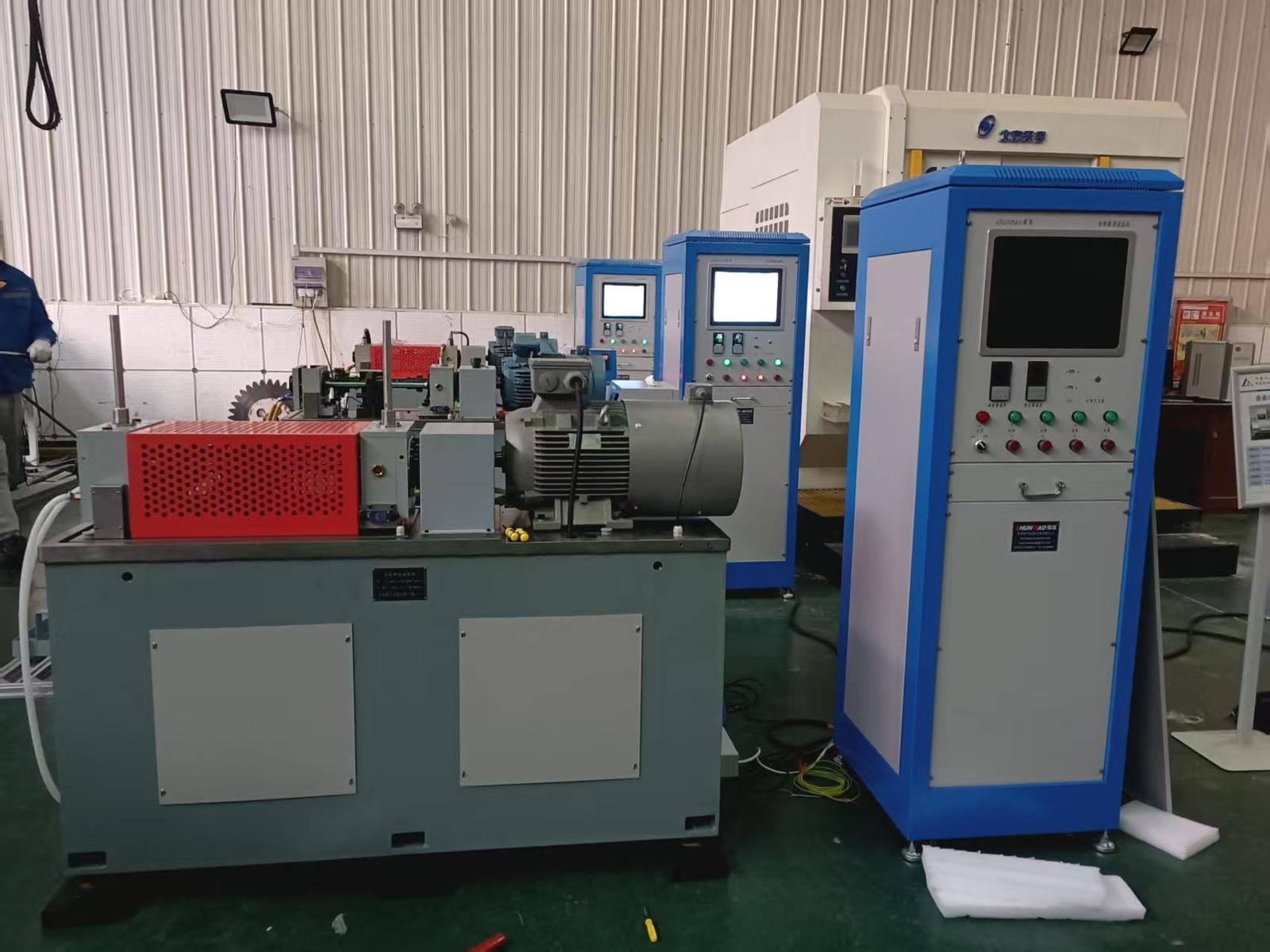
Source note: the referenced media feature dates from 8 October 2024. Equipment-user information is from Shunmao’s customer archive; technical context is based on the SHM-3A manual. The media feature is not a product certification or recommendation.